



















































Unlock Better Health with These 5 Deep Breathing Exercises
Ever noticed how a deep sigh seems to wash away a moment of stress? That’s no mere coincidence. Breathing deeply does more than fill our lungs; it profoundly influences our overall health. By simply changing how we breathe, we can trigger significant improvements in mental clarity, energy levels, and even physical health. Here’s how you can start tapping into those benefits with five simple deep breathing exercises.
The Power of Deep Breathing
Deep breathing is akin to hitting the reset button on your stress levels. It increases oxygen flow, which boosts brain function and reduces stress chemicals in the body. It’s not just about taking longer breaths; it’s about fully engaging the diaphragm and the muscles around your lungs to invigorate your entire body. This process can lower blood pressure, promote better digestion, and aid in healthier sleep patterns.
1. The Diaphragmatic Breathing Technique
Also known as belly breathing, this technique is great for beginners wanting to improve lung capacity and stabilize mood.
How to do it:
- Sit comfortably with your back straight or lie flat.
- Place one hand on your belly and the other on your chest.
- Inhale slowly through your nose, ensuring your diaphragm inflates enough to stretch the lungs.
- Hold for two to three seconds.
- Exhale slowly through pursed lips, pressing gently on your belly to help expel air.
Consistency with this exercise can enhance your lung function and introduce a natural calmness in your daily routine.
2. The 4-7-8 Breathing
This technique, popularized by Dr. Andrew Weil, is a quick way to reduce anxiety and help you sleep better.
How to do it:
- Empty your lungs of air.
- Breathe in quietly through the nose for 4 seconds.
- Hold the breath for a count of 7 seconds.
- Exhale forcefully through the mouth, pursing the lips and making a “whoosh” sound, for 8 seconds.
- Repeat the cycle up to four times.
3. Alternate Nostril Breathing
This is a common practice in yoga, known to enhance cardiovascular function and lower stress levels.
How to do it:
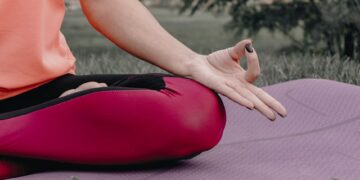
- Sit in a comfortable position with your legs crossed.
- Place your left hand on your knee and your right thumb against your nose.
- Exhale completely and then close the right nostril.
- Inhale through the left nostril then close it with your fingers.
- Open the right nostril and exhale through it.
- Inhale through the right nostril, then close it.
- Open the left nostril and exhale.
Repeat this sequence for 5 to 10 cycles.
4. The Breath Focus Technique
This involves using a word or phrase to help you focus during deep breathing.
How to do it:
- Choose a calm or uplifting word or phrase.
- While you breathe deeply, imagine that you are breathing in peace or energy.
- As you breathe out, consciously let go of stress and tension.
5. Progressive Relaxation
Focus on each part of your body in sequence to achieve total body relaxation.
How to do it:
- After a few minutes of deep breathing, shift your attention to the toes of your right foot.
- Tense these muscles for a moment and then relax them as you breathe out.
- Gradually work your way up through the different areas of your body, including legs, abdomen, back, hands, arms, shoulders, neck, and face.
Perform this practice lying down if possible and spend about 20 to 30 seconds on each part of your body.
Conclusion
Integrating these deep breathing exercises into your daily routine can be a game-changer for your health. Not only does each method unlock better health by improving respiratory function, but they also contribute significantly to mental wellness and emotional stability. Start with a few minutes each day, gradually increasing the duration as you become more comfortable with the practices. Remember, the key to reaping the benefits lies in consistency, so keep at it, and enjoy your journey to better health!